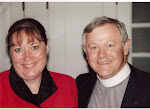












It seems like years since I've posted anything. Amidst my complete disinterest in technology, I forgot how to access my blogspot account. But now I am back again. Any time I am faced with technology, I seem to hear far off in the distance, a faint voice chanting "One ring to rule them all! One ring to rule them all! One ring to rule them all!"
Not that much has changed since I last posted, but my attitudes seem to be changing a bit. Beating cancer on a couple of occasions has a way of helping one to see how unimportant and insignificant most things we worry about really are. Tristan's wounds in Afghanistan (from which he is completely recovered) remind me that most of the other problems in my life were just minor background noise. And the knowledge that my particular positions in the Episcopal Church's late unpleasantness have been determined to be the loser, even though I continue to hold them vigorously, has been extremely liberating. Perhaps like that old Jacobite clansman who happened to be abroad on business during the '45, and who therefore survived the Hanoverian ascendancy, I am now free to be a bit odd but not much of a threat to anyone. I can toast who and what I like, and be a bit quirky (but not too quirky) without fear of imprisonment or exile. Such powerlessness is not necessarily a bad thing.
Perhaps it is from such a position that true holiness is to be found. Once we realize that we exercise no control, we are free to acknowledge with our hearts, as well as with our heads, that God is in control. I am free to pray the old prayers with the old rubrics to my heart's content, in the knowledge that living for Christ is all that remains. And that is not a bad feeling. I daresay it might be a good thing to wish it for all of my friends.
In any event, I am back, and I hope that these disorganized ramblings might be of some hope or encouragement to some fellow traveler somewhere in the blogosphere. May God bless us all with peace as we wind our ways to heaven.
In Christ,
Bill+
Sunday, October 16, 2011


Monday, June 20, 2011
"We must cultivate our garden." with apologies to Voltaire
Rector’s Rambling July 2011
Weeding seems to consume most of my July every year. As I was crawling along on all fours earlier this week, it occurred to me that life is a lot like weeding the garden, and so I offer these few mid-summer reflections:
1. CIVILIZATION IS LIKE A WELL WEEDED GARDEN, IT USUALLY DISAPPEARS BY DEGREES, NOT IN ONE CATASTROPHIC EVENT. I recently attended a funeral ( or was it a graduation, the story is the same) where people were dressed in ways that could only be described as grungy, and where general behavior failed to lend the proper dignity to the occasion. I don’t remember waking up one morning and seeing large numbers of people in torn jeans or tee shirts without proper undergarments at what had once been considered formal, or at least “dress up” functions. Neither do I remember getting up one morning and seeing three foot specimens of Queen Ann’s Lace growing in my runner beans. It happened by degrees because we stopped doing the little things which show respect to other people and lend dignity to special occasions. Perhaps if we all started with small things, like saying “please” and “thank you,” we could at least get back to business casual or better as a way of showing respect for special days and special people.
2. PEOPLE TEND TO VALUE THINGS THEY HAVE TO WORK FOR. Peas are a precious commodity to me. They are probably one of the most labour intensive crops in my garden. I generally share tomatoes, and green beans, and even my glorious Yukon gold potatoes; but almost never my peas. They involve too much work to think that someone might leave a few on the plate at the end of a meal. It is easy to take things for granted if we don’t work hard for them- things like our church, our town, and our friendships. It would be a better world, a more invested world, if we all looked at our schedules and determined to work hard, even sacrificially, in one area of our community life which impacts others in a meaningful way.
3. SOMETIMES, YOU HAVE TO LET A BIT OF THE BAD GROW ALONGSIDE THE GOOD. The aforementioned peas are a case in point. Garden peas have very shallow root systems. Pulling up deep rooted perennial weeds in the vicinity of peas often uproots the pea plant as well. Sometimes it is better to trim the weed that the pea plant might live. It is the same with people whom God has not finished with quite yet. (I think that includes all of us!) A little patience and a willingness to tolerate mixed results in the short term can bring real blessings in the end.
4. EVEN WHEN I WORK HARD, THINGS DON’T ALWAYS WORK OUT THE WAY I HAD HOPED THEY WOULD. I weeded faithfully this year, built trellises, and purchased good seed. The first two plantings of beans, and the first planting of peas still rotted in the ground from too much rain. And so I tilled and planted again. Like is a lot like that. Sometimes our plans don’t work out, but persistence and hard work generally pay off. Life is filled with “unforeseen occurrences” but the general principles remain the same. If we love God and those among whom he has placed us (even the ones we don’t like), if we work hard and in harmony with the principles of God revealed in Nature and the Bible, we are much more likely to have a good life than if we try another method.
5. THERE WILL ALWAYS BE ANOTHER WEED THIS SIDE OF HEAVEN. I started pulling weeds in March and will stop about the end of February. So in life there will always be another aggravation, another sinful failure, another temptation, another problem, another issue, another person who refuses to be helpful just because that’s the way they are. But we who eat the Flesh of God, we who drink His Blood, we who are Signed by the Cross and Marked as Christ’s own forever, know that God’s grace is sufficient for the work at hand, and that one day we will reign with Him in glory.
6. AMEN, AND AMEN!
Sincerely,
Bill+
Weeding seems to consume most of my July every year. As I was crawling along on all fours earlier this week, it occurred to me that life is a lot like weeding the garden, and so I offer these few mid-summer reflections:
1. CIVILIZATION IS LIKE A WELL WEEDED GARDEN, IT USUALLY DISAPPEARS BY DEGREES, NOT IN ONE CATASTROPHIC EVENT. I recently attended a funeral ( or was it a graduation, the story is the same) where people were dressed in ways that could only be described as grungy, and where general behavior failed to lend the proper dignity to the occasion. I don’t remember waking up one morning and seeing large numbers of people in torn jeans or tee shirts without proper undergarments at what had once been considered formal, or at least “dress up” functions. Neither do I remember getting up one morning and seeing three foot specimens of Queen Ann’s Lace growing in my runner beans. It happened by degrees because we stopped doing the little things which show respect to other people and lend dignity to special occasions. Perhaps if we all started with small things, like saying “please” and “thank you,” we could at least get back to business casual or better as a way of showing respect for special days and special people.
2. PEOPLE TEND TO VALUE THINGS THEY HAVE TO WORK FOR. Peas are a precious commodity to me. They are probably one of the most labour intensive crops in my garden. I generally share tomatoes, and green beans, and even my glorious Yukon gold potatoes; but almost never my peas. They involve too much work to think that someone might leave a few on the plate at the end of a meal. It is easy to take things for granted if we don’t work hard for them- things like our church, our town, and our friendships. It would be a better world, a more invested world, if we all looked at our schedules and determined to work hard, even sacrificially, in one area of our community life which impacts others in a meaningful way.
3. SOMETIMES, YOU HAVE TO LET A BIT OF THE BAD GROW ALONGSIDE THE GOOD. The aforementioned peas are a case in point. Garden peas have very shallow root systems. Pulling up deep rooted perennial weeds in the vicinity of peas often uproots the pea plant as well. Sometimes it is better to trim the weed that the pea plant might live. It is the same with people whom God has not finished with quite yet. (I think that includes all of us!) A little patience and a willingness to tolerate mixed results in the short term can bring real blessings in the end.
4. EVEN WHEN I WORK HARD, THINGS DON’T ALWAYS WORK OUT THE WAY I HAD HOPED THEY WOULD. I weeded faithfully this year, built trellises, and purchased good seed. The first two plantings of beans, and the first planting of peas still rotted in the ground from too much rain. And so I tilled and planted again. Like is a lot like that. Sometimes our plans don’t work out, but persistence and hard work generally pay off. Life is filled with “unforeseen occurrences” but the general principles remain the same. If we love God and those among whom he has placed us (even the ones we don’t like), if we work hard and in harmony with the principles of God revealed in Nature and the Bible, we are much more likely to have a good life than if we try another method.
5. THERE WILL ALWAYS BE ANOTHER WEED THIS SIDE OF HEAVEN. I started pulling weeds in March and will stop about the end of February. So in life there will always be another aggravation, another sinful failure, another temptation, another problem, another issue, another person who refuses to be helpful just because that’s the way they are. But we who eat the Flesh of God, we who drink His Blood, we who are Signed by the Cross and Marked as Christ’s own forever, know that God’s grace is sufficient for the work at hand, and that one day we will reign with Him in glory.
6. AMEN, AND AMEN!
Sincerely,
Bill+
Wednesday, May 18, 2011
My Soul, and the Irish Countryside
Rector’s Rambling- June 2011
Perhaps some of it had to do with location, or soil type, or warm rains coming in with the Atlantic Westerlies. Or perhaps it had more to do with my expectations going in. But the greens of Ireland were unlike anything I had ever seen. They seemed to be infused with a warm interior glow, and I was reminded of those times when I happened to be in the field or on the water when a major front passed. All of nature seemed to come alive with a primal savagery for just a few seconds, and the experience was surreal. In such times of heightened awareness, it seems easier to sense the presence of God, or at least to realize that we are not really that far removed from the rest of His creation. I can easily understand why the Old Queen, looking down the valley from Ladiesview, quipped that it was one of the loveliest vistas in the British Empire.
In a sense, it is hard to imagine how such a beautiful land could have such a tragic history, replete with tribal wars and family betrayals, famines and oppression, much of which ultimately (if not with complete accuracy) gets blamed on religion. But then, I suppose our individual histories are not that different. We are all born with such incredible beauty and potential, made as it were in the very image of God. Then the circumstances of our birth, the nature of our physical attributes, our failures in relationships, and a thousand other variables intervene and we are left feeling vulnerable, alone, and afraid. We develop methods for dealing with our situations which often end up putting walls around ourselves. We wrongly imagine that we must protect ourselves from each other, and in so doing, we end up excluding God from those hidden corners of our lives as well. The image of God remains, like the Irish sunshine, but we can see nothing in ourselves but darkness and worry. We justify our situation by the most powerful magic we can muster, and that we usually call religion, faith, or spirituality.
How different our histories might be if we could see the eternal beauty of God in ourselves and in each other. How pleasant it would be to stroll in the warm sun of God’s love, enjoying the gifts he has given each of us. How uncomplicated it would be to have His law written upon our hearts as the prophets foretold, living the Gospel every day in simplicity and love for God and man. In these months of summer, I trust we will all find the grace to acknowledge our own shortcomings, to draw closer to God through prayerful attendance upon Word and Sacrament, and to experience the beauty that is all around us.
Sincerely,
Bill+
Perhaps some of it had to do with location, or soil type, or warm rains coming in with the Atlantic Westerlies. Or perhaps it had more to do with my expectations going in. But the greens of Ireland were unlike anything I had ever seen. They seemed to be infused with a warm interior glow, and I was reminded of those times when I happened to be in the field or on the water when a major front passed. All of nature seemed to come alive with a primal savagery for just a few seconds, and the experience was surreal. In such times of heightened awareness, it seems easier to sense the presence of God, or at least to realize that we are not really that far removed from the rest of His creation. I can easily understand why the Old Queen, looking down the valley from Ladiesview, quipped that it was one of the loveliest vistas in the British Empire.
In a sense, it is hard to imagine how such a beautiful land could have such a tragic history, replete with tribal wars and family betrayals, famines and oppression, much of which ultimately (if not with complete accuracy) gets blamed on religion. But then, I suppose our individual histories are not that different. We are all born with such incredible beauty and potential, made as it were in the very image of God. Then the circumstances of our birth, the nature of our physical attributes, our failures in relationships, and a thousand other variables intervene and we are left feeling vulnerable, alone, and afraid. We develop methods for dealing with our situations which often end up putting walls around ourselves. We wrongly imagine that we must protect ourselves from each other, and in so doing, we end up excluding God from those hidden corners of our lives as well. The image of God remains, like the Irish sunshine, but we can see nothing in ourselves but darkness and worry. We justify our situation by the most powerful magic we can muster, and that we usually call religion, faith, or spirituality.
How different our histories might be if we could see the eternal beauty of God in ourselves and in each other. How pleasant it would be to stroll in the warm sun of God’s love, enjoying the gifts he has given each of us. How uncomplicated it would be to have His law written upon our hearts as the prophets foretold, living the Gospel every day in simplicity and love for God and man. In these months of summer, I trust we will all find the grace to acknowledge our own shortcomings, to draw closer to God through prayerful attendance upon Word and Sacrament, and to experience the beauty that is all around us.
Sincerely,
Bill+
Wednesday, December 29, 2010
Your Destiny...
Sermon: Second Sunday after Christmas A
Jeremiah 31:7-14
Psalm 84
Ephesians 1:3-19
Matthew 2:1-12
Preached at St John’s Lancaster
Have you ever stopped to think what you might have in common with three Zoroastrian philosophers, a Jewish carpenter, a young mother and baby, a dour but hopeful Jewish prophet, and murderously Machiavellian King? This question has the distinct sound and feel of the first line of one of those internet jokes that seem to flood my in-box, but it is far from a joke, because it reminds us all of God’s great love towards us, and of our responsibility to respond appropriately to that love.
The three philosophers are better known to us as the three kings, or three wise men. They were not Jews, but in all probability were followers of the prophet Zoroaster, a Persian prophet of the late sixth century BC. His teachings are recorded in the “Zend -Avesta,” and are based in the worship of the good god Ormazd, who is engaged with his followers in a great struggle between light and darkness. There are still Zoroastrians today in the Iranian exile community. Most of them in their homeland have, like their Christian neighbors, been killed, marginalized, or forced to flee. These philosophers were noted for their knowledge of the heavens, which they used to predict the future and to advise rulers, and they were very aware of the sacred writings of the peoples of their world. They saw a new star in the east, perhaps a comet or a conjunction of the planets, and as they compared it to their sacred writings, they came to believe that it was a harbinger of the birth of a king. And so they came to Judea looking for him.
Without doubt, one look at Herod confirmed all they had heard about him. He was a cruel and manipulative man- a man who would stop at nothing to centralize and protect his power. And so it would have come as no surprize that after they had found the child where the prophets had said he would be, they presented their gifts and “departed to their own country another way, having been warned in a dream.” The Scriptures had predicted that when Messiah came into the world as a bright and shining star that “Kings of the Earth should attend to his rising.” And so the prophesies were fulfilled in these three wise kings from Persia. Their experience seems so far removed from our own, but is it?
Joseph was just another carpenter from a small town occupied by the Romans, another town of no account. In a later age of equally dominant Imperial thought it might have been described as “south of Brownsville and east of Dover,” or merely as “beyond the pale.” But the Bible tells us that Joseph was a just man, and one who listened to God. And so he “got up” on more than one occasion and took the child, and his mother, first to Bethlehem, and then into Egypt, and then into Israel, and then into Galilee, to a city called Nazareth, “that what had been spoken through the prophets might be fulfilled, namely that He shall be called a Nazarene.” And so through this simple and just man, the protector of the Holy Family, the prophesies were fulfilled. His experience seems so far removed from our own, but is it?
Mary and her son seem to be the pawns in this story. Moved about by forces beyond her control, supplied and protected by men sent in accordance with the prophecies of God. Hunted by a murderous tyrant, and forced to relocate time after time in her child’s formative years, her humility and trust in God never flagged. She remains for us today “Our Lady,” that one human being who perhaps more than any other teaches us what it means to walk humbly with the Lord our God, and to trust him every step of the way, even when our understanding is incomplete. She is what we hope to be, what we ought to be, and so often fail to be. Perhaps she is the easiest to relate to of all the characters in this account.
And so the question remains, what do we have in common with these people? St. Paul addresses the issue when he writes to the Church at Ephesus,
Ephesians 1:3-12 (King James Version)
3Blessed be the God and Father of our Lord Jesus Christ, who hath blessed us with all spiritual blessings in heavenly places in Christ:
4According as he hath chosen us in him before the foundation of the world, that we should be holy and without blame before him in love:
5Having predestinated us unto the adoption of children by Jesus Christ to himself, according to the good pleasure of his will,
6To the praise of the glory of his grace, wherein he hath made us accepted in the beloved.
7In whom we have redemption through his blood, the forgiveness of sins, according to the riches of his grace;
8Wherein he hath abounded toward us in all wisdom and prudence;
9Having made known unto us the mystery of his will, according to his good pleasure which he hath purposed in himself:
10That in the dispensation of the fulness of times he might gather together in one all things in Christ, both which are in heaven, and which are on earth; even in him:
11In whom also we have obtained an inheritance, being predestinated according to the purpose of him who worketh all things after the counsel of his own will:
12That we should be to the praise of his glory, who first trusted in Christ.
You see, before the foundations of the world were laid, God had a plan for the salvation of his creation. In his abounding love, He knew that the freedom with which he endowed us would be misused and misunderstood. He knew that we would fall. It was the price of making us free. But freedom was the way he chose to show his love to all creation. It was as if he thought, “If after life’s vicissitudes and difficulties, they will willingly respond to my love, and learn to share that love with each other, forgiving each other and living together successfully as my people, then all creation will see the beauty of my character and know the wonder of my love.”
But back to the question at hand. “ What do you and I have in common with these people?” Like them, before the foundations of the world were laid, God knew your name, and had a plan for involving you in the outworking of his plan for the salvation of mankind, indeed of all creation. You are as it were “predestined” for this work. Like Jeremiah, the dour prophet of Israel, we are called to sing aloud the fact of God’s love in our own lives, that the people among whom we live and work might know that God is in the process of gathering in his people, from every nation, that his creation might be made whole and reflect that love and purpose and joy and peace that is his glory. It is our vocation. It is our destiny.
But what of Herod? How does he fit into this question? Herod is a tragic example of what happens to one who rejects the possibilities of oneness with God. Like all of the others in today’s lessons, and like us, he was given the gift of freedom by a loving God. But instead of that holiness of God which shines forth in love and purpose and joy and peace, he chose power and pride and control over others and at their expense; and he forfeited his own soul.
Today, God calls you and me, all of us here, to live into that vision of wholeness illuminated by the lives of the wise men, Joseph, Mary, the Babe, and Jeremiah. He calls us to be “just” like Joseph, to be obedient and submissive like Mary, to use our minds and our skills for the accomplishment of God’s plans like the wise men, to proclaim to all by word and example the reality of God’s love in Jesus Christ like Jeremiah, and ultimately to be willing to sacrifice ourselves for others for the sake of the kingdom of God, like Jesus. We are called to have these things in common with these men and women of faith. It is our destiny. Unfortunately, some among our species will choose like Herod to misuse their freedom and walk another way. But let us so live our lives that everyone we meet might see the wholeness of God in us, and be drawn to the service of Jesus, our Lord and our Saviour, our Brother and our Friend. In the Name of the Father, and of the Son, and of the Holy Ghost. AMEN.
Jeremiah 31:7-14
Psalm 84
Ephesians 1:3-19
Matthew 2:1-12
Preached at St John’s Lancaster
Have you ever stopped to think what you might have in common with three Zoroastrian philosophers, a Jewish carpenter, a young mother and baby, a dour but hopeful Jewish prophet, and murderously Machiavellian King? This question has the distinct sound and feel of the first line of one of those internet jokes that seem to flood my in-box, but it is far from a joke, because it reminds us all of God’s great love towards us, and of our responsibility to respond appropriately to that love.
The three philosophers are better known to us as the three kings, or three wise men. They were not Jews, but in all probability were followers of the prophet Zoroaster, a Persian prophet of the late sixth century BC. His teachings are recorded in the “Zend -Avesta,” and are based in the worship of the good god Ormazd, who is engaged with his followers in a great struggle between light and darkness. There are still Zoroastrians today in the Iranian exile community. Most of them in their homeland have, like their Christian neighbors, been killed, marginalized, or forced to flee. These philosophers were noted for their knowledge of the heavens, which they used to predict the future and to advise rulers, and they were very aware of the sacred writings of the peoples of their world. They saw a new star in the east, perhaps a comet or a conjunction of the planets, and as they compared it to their sacred writings, they came to believe that it was a harbinger of the birth of a king. And so they came to Judea looking for him.
Without doubt, one look at Herod confirmed all they had heard about him. He was a cruel and manipulative man- a man who would stop at nothing to centralize and protect his power. And so it would have come as no surprize that after they had found the child where the prophets had said he would be, they presented their gifts and “departed to their own country another way, having been warned in a dream.” The Scriptures had predicted that when Messiah came into the world as a bright and shining star that “Kings of the Earth should attend to his rising.” And so the prophesies were fulfilled in these three wise kings from Persia. Their experience seems so far removed from our own, but is it?
Joseph was just another carpenter from a small town occupied by the Romans, another town of no account. In a later age of equally dominant Imperial thought it might have been described as “south of Brownsville and east of Dover,” or merely as “beyond the pale.” But the Bible tells us that Joseph was a just man, and one who listened to God. And so he “got up” on more than one occasion and took the child, and his mother, first to Bethlehem, and then into Egypt, and then into Israel, and then into Galilee, to a city called Nazareth, “that what had been spoken through the prophets might be fulfilled, namely that He shall be called a Nazarene.” And so through this simple and just man, the protector of the Holy Family, the prophesies were fulfilled. His experience seems so far removed from our own, but is it?
Mary and her son seem to be the pawns in this story. Moved about by forces beyond her control, supplied and protected by men sent in accordance with the prophecies of God. Hunted by a murderous tyrant, and forced to relocate time after time in her child’s formative years, her humility and trust in God never flagged. She remains for us today “Our Lady,” that one human being who perhaps more than any other teaches us what it means to walk humbly with the Lord our God, and to trust him every step of the way, even when our understanding is incomplete. She is what we hope to be, what we ought to be, and so often fail to be. Perhaps she is the easiest to relate to of all the characters in this account.
And so the question remains, what do we have in common with these people? St. Paul addresses the issue when he writes to the Church at Ephesus,
Ephesians 1:3-12 (King James Version)
3Blessed be the God and Father of our Lord Jesus Christ, who hath blessed us with all spiritual blessings in heavenly places in Christ:
4According as he hath chosen us in him before the foundation of the world, that we should be holy and without blame before him in love:
5Having predestinated us unto the adoption of children by Jesus Christ to himself, according to the good pleasure of his will,
6To the praise of the glory of his grace, wherein he hath made us accepted in the beloved.
7In whom we have redemption through his blood, the forgiveness of sins, according to the riches of his grace;
8Wherein he hath abounded toward us in all wisdom and prudence;
9Having made known unto us the mystery of his will, according to his good pleasure which he hath purposed in himself:
10That in the dispensation of the fulness of times he might gather together in one all things in Christ, both which are in heaven, and which are on earth; even in him:
11In whom also we have obtained an inheritance, being predestinated according to the purpose of him who worketh all things after the counsel of his own will:
12That we should be to the praise of his glory, who first trusted in Christ.
You see, before the foundations of the world were laid, God had a plan for the salvation of his creation. In his abounding love, He knew that the freedom with which he endowed us would be misused and misunderstood. He knew that we would fall. It was the price of making us free. But freedom was the way he chose to show his love to all creation. It was as if he thought, “If after life’s vicissitudes and difficulties, they will willingly respond to my love, and learn to share that love with each other, forgiving each other and living together successfully as my people, then all creation will see the beauty of my character and know the wonder of my love.”
But back to the question at hand. “ What do you and I have in common with these people?” Like them, before the foundations of the world were laid, God knew your name, and had a plan for involving you in the outworking of his plan for the salvation of mankind, indeed of all creation. You are as it were “predestined” for this work. Like Jeremiah, the dour prophet of Israel, we are called to sing aloud the fact of God’s love in our own lives, that the people among whom we live and work might know that God is in the process of gathering in his people, from every nation, that his creation might be made whole and reflect that love and purpose and joy and peace that is his glory. It is our vocation. It is our destiny.
But what of Herod? How does he fit into this question? Herod is a tragic example of what happens to one who rejects the possibilities of oneness with God. Like all of the others in today’s lessons, and like us, he was given the gift of freedom by a loving God. But instead of that holiness of God which shines forth in love and purpose and joy and peace, he chose power and pride and control over others and at their expense; and he forfeited his own soul.
Today, God calls you and me, all of us here, to live into that vision of wholeness illuminated by the lives of the wise men, Joseph, Mary, the Babe, and Jeremiah. He calls us to be “just” like Joseph, to be obedient and submissive like Mary, to use our minds and our skills for the accomplishment of God’s plans like the wise men, to proclaim to all by word and example the reality of God’s love in Jesus Christ like Jeremiah, and ultimately to be willing to sacrifice ourselves for others for the sake of the kingdom of God, like Jesus. We are called to have these things in common with these men and women of faith. It is our destiny. Unfortunately, some among our species will choose like Herod to misuse their freedom and walk another way. But let us so live our lives that everyone we meet might see the wholeness of God in us, and be drawn to the service of Jesus, our Lord and our Saviour, our Brother and our Friend. In the Name of the Father, and of the Son, and of the Holy Ghost. AMEN.
Subscribe to:
Posts (Atom)