


Friday, March 2, 2012

Do You Believe God's Promise?

Sermon for II Lent, Year B Revised Common Lectionary

Romans 4:9-25

Preached at St. John’s Lancaster 4 March 2012

Circumcision was very important in the Jewish community in the time of Jesus and Paul. It was, like Baptism for us, the mark of entry into the community of faith. It physically identified every Jewish boy eight days old or older as a member of Israel, the people of God. I suppose that many Jews of that day, like many Christians today, came to rely on the rite of the sacrament, instead of that which it represented and accomplished and fulfilled, as the primary indicator of their relationship with God. As long as the ceremony was done in a proper manner, they were of Israel and In God. When St. Paul, missionary Archbishop to the Gentiles, wrote to the believers in Rome in the first century, he did not seek to downplay or minimize the importance of the ceremonies of the people of God, but he worked hard and logically to demonstrate that the importance of any ceremony, might we say any sacrament, is in the true reality it proclaims rather than the outward forms of the ceremony.

Paul’s legal mind was well suited to make such an argument. God’s promises to Abraham took place before he was circumcised, indeed before he even knew what the law was. It could not have been that Abraham’s participation in the ceremony, or even his righteousness in keeping the law, were the causes of God’s promise and blessing to him, because at the time of the promise, the rite of Circumcision had not been introduced and the law had not been revealed in its fullness. Abraham was blessed by God because when God looked at his heart, he saw that Abraham was “fully convinced that God Was able to do what he had promised” (Romans 4:21).

None of this is to say that the sacrament (circumcision) or the law (obedience to God) are unimportant. They are means of instruction and grace that God has ordained. But it is to say that God looks upon our hearts in his dealings with us. He looks for people who are on the adventure of growing into that state of heart, mind, and life whereby our reality can include a willingness to see beyond the realities and limitations of this life and embrace what the writer to the Hebrews called “the substance of things hoped for, the evidence of things not seen” (Hebrews 11:1). That is precisely what Abraham did when he believed the promise that he, an old man with a wife well past menopause, would be the father of many nations. He was willing to see beyond scientific probabilities and human expectations to believe that “what God had promised, he was able also to perform” (Romans 4:21)

Because of this belief, Paul continues, God “reckoned this faith unto him as righteousness” (Romans 4:22). An older translation says “imputed to him for righteousness.” You see, God proclaimed Abraham righteous not because of ceremonies and obedience, as important as those things are. He proclaimed him righteous, because of the attitude of his heart and the nature of his expectations. As F.F. Bruce from the University of Manchester wrote, “Abraham’s justification and attendant blessings were based on his faith in God; they were not earned by effort or merit on his part…but conferred on him by God’s grace” (TNTC Romans 109).

In its simplest form, to be righteous means to fulfill the claims of right. Thus when Penelope mourns for Ulysses, Homer says that she fulfills the sacred obligations of a wife. When Antigone buries her brother and incurs the wrath of the state, she embodies that higher unwritten law against barbarism. The translators of the Septuagint, the Jewish translation of the Old Testament into Greek, often translated the word “Righteousness” as “Mercy,” or “Kindness.” As Professor Vincent of Union Theological Seminary and so many other scholars have pointed out over the years, “Righteousness is union with God in character” (Vincent’s Word Studies in the NT iii12).

And all of this takes us back to circumcision. Blessed Paul was writing to Romans, Gentiles who had not been circumcised. He wrote with the good news that their ability to participate in the blessings of God, their ability to be “unified with God in character,” was based not on their participation in the rites and ceremonies of Judaism, or in the moral uprightness of their past life, but in their decision to “believe in him who raised Jesus our Lord from the dead, who was handed over to death for our trespasses and was raised for our justification” (Romans 4:24-25).

Have you made that decision today? Are you willing to consider those things, or that thing in your own life which seems insurmountable? Are you willing to believe that God will help you to forgive that ex-spouse or that parent who hurt you so badly so many years ago? Are you willing to believe that God will give you strength , presence of mind, and persistence to take something as persistent as clinical depression or alcoholism to God on a daily basis and work a program of recovery and healing? Are you willing to believe that God will help you to push away from the buffet table or the internet console which has been the source of so many failures and so much sin in your life. Are you willing believe that God will give you the strength to walk away from a relationship or lifestyle choice which the Bible says is contrary to God’s will for his sons and daughters?  Are you willing to believe that God will give you the perseverence and strength to make restitution to that person you have wronged, and to fulfill those responsibilities you have failed to live up to?   Are you willing to believe that God is able to do what he has promised?

If you are willing to take that step today, God will meet you just as he met Abraham. He will impute to you union with his own character and give you a strength beyond what you have ever known. It will be a struggle, a war in fact. Satan will marshal all of the forces of hell to block your success. But our God is greater than Satan. And he has sent the Blessed Holy Spirit to accomplish in our lives that victory which Christ Jesus accomplished for us on the cross.

If you have been living your life in a sort of low grade discouragement which seeks to serve Christ but seems to fail with disturbing regularity, I invite you to come to him in faith today. If you have been relying on the ceremony of baptism or communion, or on church attendance or being a good person to get you into heaven, but have never been quite sure that you will make it, I invite you to come to him in faith today. The Bible says with absolute clarity that if you believe on him who raised up Jesus from the dead, if you are willing to commit yourself to the life changing conviction that God is able and willing to do what he has promised, the very character of God will be imputed to you and your life will be changed forever.

Now Father, in this holy season of Lent, help us to believe as Abraham believed, that you are able to keep your promises to transform us and give us strength to fight the temptations we face every day. Make us victorious Lord. Assure us of your presence with us every day. And help us to know in our hearts that we will live with you forever. Through Jesus Christ our Lord and Saviour, who lives and reigns with you and the Holy Ghost, one God, now and forever. AMEN.

Monday, February 27, 2012

Happy the man...

"beatus ille qui procul negotiis...paterna rura bobus exercet suis"
-happy the man who far away from business...tills with his own oxen the fields his father owned-
                                                      Horace, Epodes ii:1-3

I was up early this morning for no apparent reason.  The terriers were more lethargic than usual, but after they bounced out the door and down into the woods for their morning constitutional, I settled in to pay some bills and take care of some outstanding business.  But first, I walked over to the left wall of the chapel to turn on the propagator lights.  I love starting seeds in the late winter.  Last week it was broccoli and collards- this week lettuces, cabbage, spinach, and kohlrabi.  After a couple of weeks inside, they will all be ready for transplanting to the greenhouse, although hard freezes this time of year can be treacherous even with double frames inside the unheated greenhouse.  Sometime in the next week or two, the tomatoes and peppers will get their starts, although they take a bit more care in handling until the last frost sometime in early to mid-May. 

My gardening propositions this year include plans to be a bit more intentional about row-cropping flowers to cut and keep in the house.  With Rebecca back to teaching from home again, it is wonderful to experience the small joys of domesticity, and cut flowers are definitely one of those joys.  I'm also planning to be a bit more organized about rotational planting this year to give more of a rolling harvest for immediate consumption, with the larger crops of garden peas, tomatoes, fruits, and berries being the focus of preservation for winter's enjoyment.  The plan this year is to start everything inside, even the peas and beans.  In theory, this should allow for more systematic weed control and less waste of seed.  It also allows me to play with my propagator and greenhouse.  When the well stocked grocer is just around the corner, one has a bit more liberty in exploring new horticultural ideas.

Ohio is a wonderful place to be as winter fades into spring.  I think I'll have a cup of tea and read morning prayer and give thanks for it all.


Saturday, February 18, 2012

Getting Ready For Easter

Rector’s Rambling- March 2012


This is the time of year when people ask me what I do for Lent in preparation for Easter. It is a simple question, and hopefully this year I will be able to give a clear and simple answer.

1. Theologically, I try to engage in readings and activities which help me to come face to face with my own shortcomings that I might appreciate more specifically the wonder of God’s grace which is offered to us all in Jesus Christ.

2. Personally, I try to make myself accountable for my actions, and to actively consider my habits and thoughts as they compare and contrast to God’s commands in the Bible.

3. Religiously, I participate in those disciplines which the Bible, Holy Tradition, and personal experience indicate will help me to receive God's forgiveness, grace, and growth.

And so specifically, what have I committed to do this year?

1. I will read the Bible, more than any other book, and prayerfully ask God to apply it to my conscience and my life.

2. I will pray regularly, employing the common forms of the Book of Common Prayer and those personal forms of private prayer which seem to address the needs of the moment.

3. I will receive the Sacrament of Holy Communion regularly (at least weekly.)

4. I will visit my confessor each month and participate in the Rite of Reconciliation found in The Book of Common Prayer.

5. Each week in Lent, I will meditate on the Stations of the Cross, found in the Episcopal Book of Occasional Services, in order to more fully appreciate what Jesus did for me, and for us all.

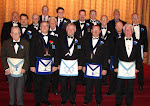
6. I will attend the spring reunions of my fraternity, where the rituals call me to consider the claims of morality and of God in my life. I will pay special attention to The Holy Royal Arch, The Order of the Temple, the Rose Croix, and the 31st and 32nd degrees, in which I regularly recommit myself to the Lordship of Jesus Christ.

7. I will prayerfully and meditatively read one classic of spiritual literature during Lent; this year, The Conferences of John Cassian.

I hope this synopsis of my Lenten plans will help all of you as you develop your own. Remember that while our devotions and disciplines do nothing to earn us credit with God (we are all saved by grace alone,) they will help us to order our own introspection, and to prepare our hearts and minds to recognize and respond to God’s free gift of grace in our lives.

Faithfully,

Bill+

Saturday, February 11, 2012

What Do They Want?

Sixth Sunday After Epiphany, Year B

Preached at St. John’s Lancaster, 12 February, 2012

II Kings 5:1-19

Just what do they want from us? It is a fair question. Some would say that I must put aside the position held by our holy Mother the Church through the ages that no man comes to the Father save through Jesus Christ. They would say that to hold Christianity as uniquely true while saying that other religions when believed sincerely will not lead to God is a hateful and narrow minded doctrine. Others would say that whatever my own beliefs might be, I must be willing to put them aside for a higher good. That is essentially what the government has been telling our Roman Catholic brothers and sisters over the last two or three weeks. Still others would say that if I say that only the baptized should be permitted to receive Holy Communion, I am excluding people from the kingdom of God and proving myself to be mean spirited and into controlling others. Others would say that if I refuse to redefine that understanding of marriage which has been held by Christians and Jews- and Muslims and Zoroastrians and Hindus and even Pagans throughout human history- that I am judgmental and arcane, and even hateful. There are those in our own denomination who would ask those questions or make those statements. And yet as your priest, as a priest of Jesus Christ, I must answer with Article XX of the Articles of Religion that “it is not lawful for the Church to ordain any thing that is contrary to God’s Word written, neither may it so expound one place of Scripture, that it may be repugnant to another. Wherefore, although the Church be a witness and keeper of Holy Writ, yet,… it ought not to decree any thing against the same.” And with St Paul in his second Epistle to the Thessalonians I would say “stand fast, and hold the traditions which ye have been taught.” (II Thessalonians 2:15)

Today’s first lesson from Second Kings Five is most instructive regarding what others may want from us and what God wants from us. Naaman was a very successful Syrian general who was highly favored by his master, who like Naaman was a pagan, or one who worshipped the old nature gods. While the Scriptures are not explicit with details, some Jewish and early Christian scholars believed that God had employed Naaman’s military prowess to destroy the power of Ahab and Jezebel as a punishment for their ravages against the prophets of God. But while Naaman was blessed, he had a major problem. He had leprosy, that dreaded skin disease which in all of its forms rendered the sufferer unclean and eventually led to their rejection by human society in that era. His wife had a young Israelite slave girl who said to her mistress, “there is a prophet in my homeland who could heal your husband.” Now in those days, it was common for people, especially rich people to travel to foreign places to seek medical treatment. We have documents which show the precise nature of such travel and the diplomatic protocols which accompanied such trips. But when the King of Israel received the letter from the King of Syria paving the way for the trip, he was terrified because he thought the Syrians were just looking for some excuse to invade their Israelitish neighbors. When Elisha heard about the king’s dilemma, he sent a message to the king and said, “Let him come to me that he may know that there is a prophet in Israel.” Naaman arrived in all of the glory attendant upon his office, and came with faith that this Israelite prophet would pray for him or do some thing which would bring about his healing. He was furious when Elisha refused to receive him, and merely told him to go and wash seven times in the River Jordan. The General exploded! He was not accustomed to being treated in such a fashion. He named the rivers of his own homeland, all larger and clearer and more beautiful than the Jordan, and the Bible tells us that “He went away in rage.” But his staffers spoke to him and said, “My Lord, if the prophet had demanded of you some great quest, you would have complied, so why not do this simple thing?” And he did. “and his flesh was restored like the flesh of a young boy, and he was clean.”

Most modern scholars see this passage of Scripture as part of a larger group of stories having to do with the power of God, and so it is, but the Fathers of the Early Church saw it as much more. Ephraim the Syrian, writing in the mid-fourth century, notes that Naaman’s pride filled him with a spirit of rebellion, which is a sin against God and the leprosy of the soul. Indeed, Naaman, like all of us needed to be healed and delivered from that disease by Christ’s power, and therefore he is sent to Jordan, which is a prophetic pre-figuring of the coming baptism into Jesus Christ which is to bring all nations to purification “through the bath of regeneration, whose beginning was in the river Jordan, the mother and originator of baptism." Naaman offered the prophet rich gifts, because in his pride, he could not imagine that deliverance was the free gift of a loving God. (ACCS V 167-68) Origin, writing in the early third century in Alexandria, points out that a man like Naaman does not, could not understand the great mystery of the Jordan, because true healing comes from the Lord Jesus alone, and Naaman persisted in the error of his pride. (Commentary on John in ACCS V 168) Bishop Caesarius of Arles, writing in the early sixth century, points out that Naaman is a representative of all of us gentiles, who presume “on our own free will and …merits; but without the grace of Christ” we cannot possess health. It is as we submit to the way of Christ in humility and are baptized that we listen to the advice of Elisha and are “freed from the leprosy of the original and actual sins… Gentiles, although old by reason of their former sins and covered with the many spots of iniquity as with leprosy, are renewed by the grace of baptism in such a way that no leprosy of either original or actual sin remains in them. Thus, following the example of Naaman, they are renewed like little children by salutary baptism, although they have always been bent down under the weight of sins.” (Sermon 129:4-5 in ACCS V 168-69)

And so you see, according to our holy Mother the Church, Naaman, and all of us have received the grace of God because some prophet of God stood firm against our demands that the Gospel message be changed to become more palatable to us who wandered about in our own pride and sin. But because there was a man, or we might say a people, who was faithful to the revealed Word of God, the leprosy of sin was done away and healing came to the nations. Whatever people may want us to say or do, our hearts and our minds, our beliefs and our actions and our words must be carefully conformed to the Word of God, which is the authentic eyewitness account of the acts of God in this world. It is there that we find the record of the Christ, Jesus of Nazareth, who is our salvation. My brothers and sisters, in this age there are many who would have us to change, or at least substantially modify, this Good News which has been entrusted to us. This we must never do. Might we, like those who have gone before proclaim the Faith we have received with love and respect for all people, knowing that true healing, real deliverance, and genuine salvation are found only in the Name of Jesus. In the Name of the Father, and of the Son, and of the Holy Ghost. AMEN.